This 70-year-old Engineer is providing education to the poor and underprivileged completely free of cost.
Education is the most powerful weapon one can use to bring about a change in the society. Although the roots are bitter, the fruit is definitely sweet. But in a country like India which is ridden with poverty, a lot of children lose out on the opportunity to learn and thereby grow.
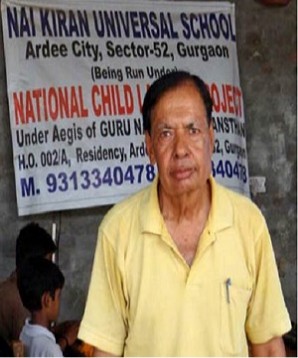
A 70-year-old retired engineer, J.D. Khurana, was deeply troubled to find many kids carrying out odd jobs at a time when they were supposed to be studying. Their underprivileged status hindered their possibilities and they were forced to forgo their one true chance to enhance their mind.
The Importance of Education
It all started with his driver’s son. Unfortunate circumstances hadn’t allowed the boy to grasp his true potential and Khurana, noticing that, undertook the responsibility of his education. He enrolled him in a private school and funded his education. The boy who knew nothing developed a massive interest in the field of science and before Khurana knew it, the boy was an established engineer working in a reputed organization. It was then that Khurana decided, he was going to help change the lives of underprivileged kids by providing them with the one thing they need the most and are denied outright – education!
Gond communityMakeshift School of Odisha is Deepanjali Patra. But unlike other girls of her community who had to succumb to the norms, Deepanjali decided to take a step ahead by questioning them, now leading her life in a constructive way - walking through her dreams. Let's get into knowing about Patra whose story is an example of courage.
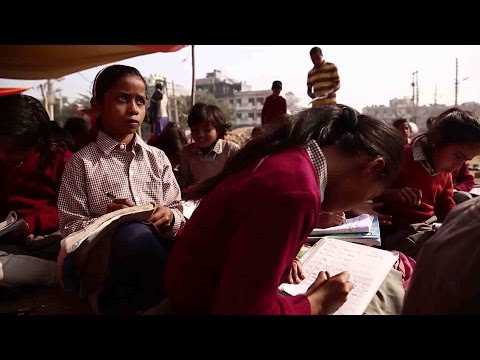
. Instead of holding books and going to school, they are forced to hold the pride of their maternal house and leave to their in-law's chawl. She should suffer all that her in-laws give her. Life becomes hell with dreams shattered and hopes smashed. One such young girl from theKhurana’s dream school started with just 4 kids in the parking lot of his building. Fast forward three decades later and it is now a full-fledged school with over 400 children, all of whom are given the benefits of education, absolutely free of cost. Their initiative took form of a makeshift school called the ‘Nai Kiran Universal School’. It is makeshift because the classes are conducted in tents that they personally set up out in an open field at the beginning of each day.
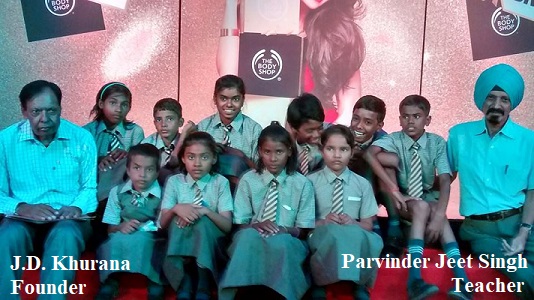
Classes from pre-nursery to ninth are held and they follow the syllabus and curriculum of Delhi Public School. The school also provides free stationery, textbooks, and uniforms
. In order to ensure a good nutritional upbringing, Khurana has also arranged for a mid-day meal scheme. The funding is all managed by Khurana himself and a couple of volunteers and well-wishers.
An Expected Shock:
It has been six years since the school’s inception and for Khurana, it is the same routine. Every day, for him, begins at 5:30 AM, where he wakes up to clear the plot and prepare the teaching material for the day and ends at 10:00 PM where he finishes grocery shopping for the next day.
The one and only challenge the school faces currently is that there isn’t a roof above their heads. The makeshift tent business is temporary but Khurana is actively working to change that. People are welcome to donate if they deem it fit and together, he hopes to overcome this hurdle and provide for an authentic experience of education.
Catalyst for Change
Khurana, although retired is making a huge difference even now. The children who have studied under him have gone ahead to achieve what was once thought impossible. He was the catalyst they needed. He was the shining ray of light at the end of a dark tunnel that these underprivileged folk considered their life. It goes to say that you can truly bring about a change and Khurana’s understanding on the importance of education has helped him achieve something that brings true happiness – both in his life and in others!
A Ray of Hope:
Patra was still trying her best to convince her parents when she came across Oxfam India.

She attended a meeting conducted by Oxfam India in which they educated people on the ill effects of child marriage and the legal repercussions of it. In that meeting, Patra learnt that Indian law forbids child marriages and she also learnt that if a child is forced into a marriage, they can approach the Child Development Project Officer (CDPO) in their area. This knowledge boosted Deepanjali's confidence and she dared to convince her parents to tell them everything she learnt from the meeting. The officials from Oxfam also met Patra's parents and explained the benefits of education and financial independence for girls. Deepanjali Patra's parents were convinced. “People in the village often rebuke my parents for falling prey to the NGO’s arguments against child marriage. They say that my parents want to keep me till I get old but we have turned a deaf ear now,” says Patra.

On A Mission:
After being saved from forced marriage, Patra started working with Oxfam to spread awareness about the ill effects of child marriage. She is organizing campaigns to increase the marriage age for girls in her community. She also participates in monthly meetings along with other members of the village. "There have been cases where their children have died when they were under a year old, adding that how a woman in her village who got married early delivered two children one after the other - both of whom died when they were only seven or eight months old. Child marriages destroy a young girl’s life, effectively putting an end to her childhood. Girls getting married at an early age are unable to access education and instead forced into household chores. Often, young married girls who become pregnant at an early age face a greater risk of serious health conditions. Men marry young girls with the sole objective of fulfilling their sexual needs. Women can’t deny sex to their husband, whether they want to or not,” she opines.
Another social evil that's widely spread in the community is the taboo associated with menstruation. “When girls start to menstruate, they are forbidden from doing any household work or stepping out of their houses for seven days. People believe that girls will be condemned if they step out,” Patra says. She is trying relentlessly to spread awareness and enlighten the people of her community. She believes that education is the only weapon to fight ignorance.

The Teacher:
Besides her association with Oxfam, Deepanjali also teaches students of classes 1-8 in the community school and earns an income of Rs.1,300. In the days to come, Deepanjali wishes to join the police force. “I want to get married out of my own choice and not out of pressure,” she states.
Courageous little girl who fought with conventional norms of society and is also helping others towards the path of enlightenment.
If you Like to contribute to this Page, Please Drop us a Mail.
hello@bookofachievers.com